



3D Printing Basics
3D printing builds objects layer by layer from a digital file. It’s used for prototypes, custom parts, and one-off items. Below are the main technologies explained simply.
What is Prototyping?
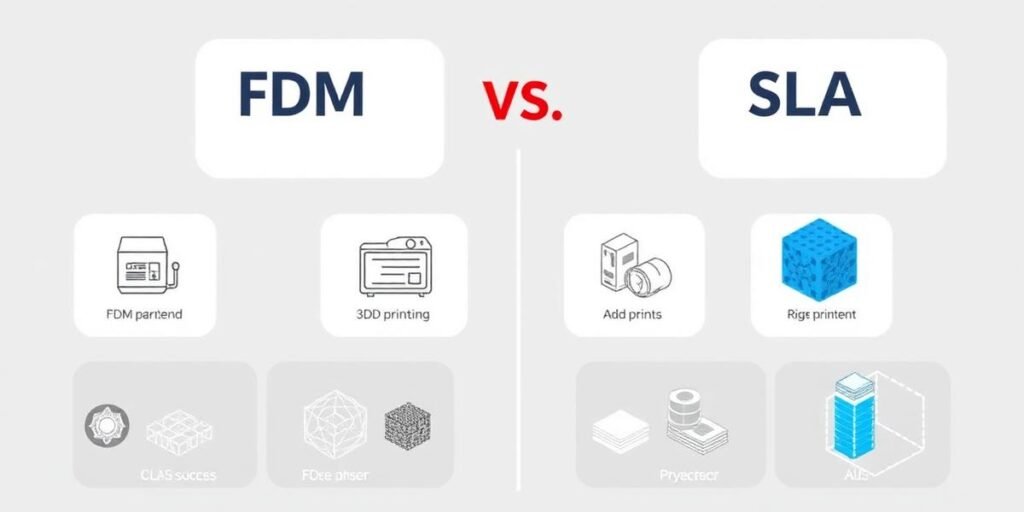
FDM (Fused Deposition Modeling)
Affordable and strong — best for functional parts and fast prototypes
FDM printers melt plastic filament and build parts layer by layer. It's the most common and cost-effective 3D printing method.
Best for:
- Functional prototypes that need to be strong
- Large parts and assemblies
- Parts that will be handled or tested
- Cost-effective production
SLA (Stereolithography)
Very detailed and smooth — best for visual models and high-fidelity prototypes
SLA printers use light to cure liquid resin into solid plastic. This creates very smooth, detailed parts with fine features.
Best for:
- High-detail visual models
- Small parts with fine features
- Smooth surface finish requirements
- Jewelry, miniatures, and precision parts
Beyond 3D Printing
Reverse engineering turns a physical part into a CAD model; prototyping helps you test ideas before full production.
Convert physical parts to CAD files
Convert physical parts to CAD files
Need Help Right Away?
Not sure where to start? Upload your file and we'll guide you through the process.